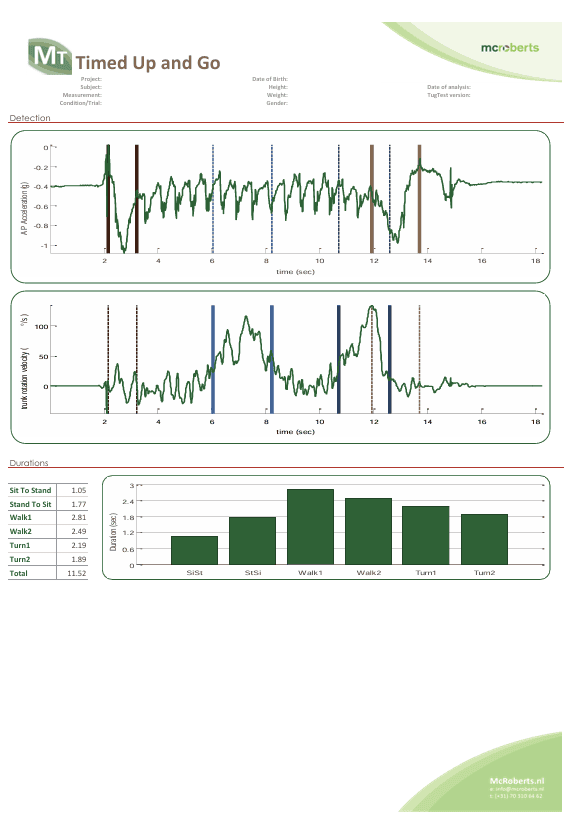
The Timed Up & Go (TUG) test evaluates multiple components of functional mobility — from standing up to walking, turning, and sitting down again. While traditional assessments record only the total time, the MoveTest captures each phase separately and measures trunk kinematics. This provides a detailed view of how the task is performed, offering deeper insight into balance, coordination, and movement quality.
Key Outcomes

TUG Total Duration
The total time needed to complete the TUG is automatically calculated, replacing traditional stopwatch-based measurement with an objective and reliable value.

TUG Sub Durations
The TUG is segmented into six phases—two transitions, two walking periods, and two turns. The MoveTest quantifies the duration of each phase, noting that overlapping movements may cause sub-durations to differ from the total time.
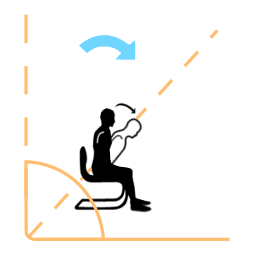
Chair Transition Trunk Angles
Trunk flexion and extension angles are extracted for both sit-to-walk and walk-to-sit transitions, providing insight into postural control during these functional movements.
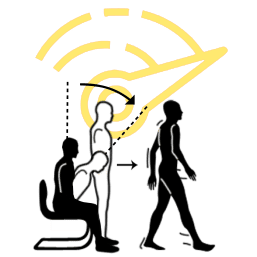
Chair Transitions Angular Velocity
Angular velocities of the trunk are calculated during flexion and extension, reflecting the momentum generated throughout the chair transitions.
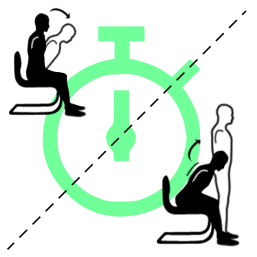
Chair Transitions Sub Durations
The durations of the dynamic flexion and extension phases within each chair transition are identified and reported separately for detailed performance analysis.
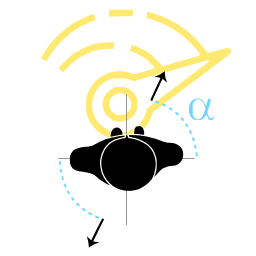
Maximal Yaw Velocity Turns
Maximum trunk rotation velocity around the yaw axis is measured during each turn, offering a precise indicator of turning performance and stability.
Resources
The validity of assessing temporal events, sub-phases and trunk kinematics of the sit-to-walk movement in older adults using a single inertial sensor
June, 2016
April, 2016
Intra-Rater, Inter-Rater and Test-Retest Reliability of an Instrumented Timed Up and Go (iTUG) Test in Patients with Parkinson’s Disease
March, 2016
Example Report